

iTRQ - Organic Mechanisms
The ability to draw organic mechanisms is developed and retained through repeated practice. Traditionally this practice occurred through untimed homework, but the widespread availability of solution websites has made it easier for students to obtain correct answers without strengthening long-term memory. In response, Chem21 developed iTRQs (interactive Timed Repetitive Quizzes), where students complete a series of steps within a set time window (e.g., 50-200 seconds).
In the Organic Mechanism iTRQ, students earn full credit if they correctly draw the mechanism before the timer reaches zero. If they complete the mechanism but exceed the time limit, it still counts as 1 completed mechanism. Depending on the assignment parameters, students may need to submit 2-5 completed mechanisms outside the time limit to finish the assignment and receive full credit.
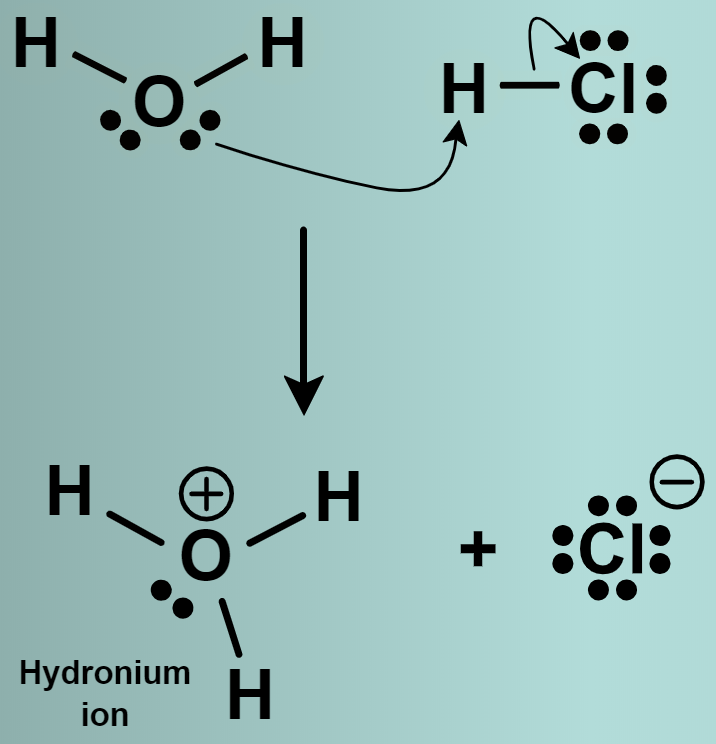
Early in the Organic curriculum, students are introduced to curved arrows and electron-pushing with static examples like . . . .
 |
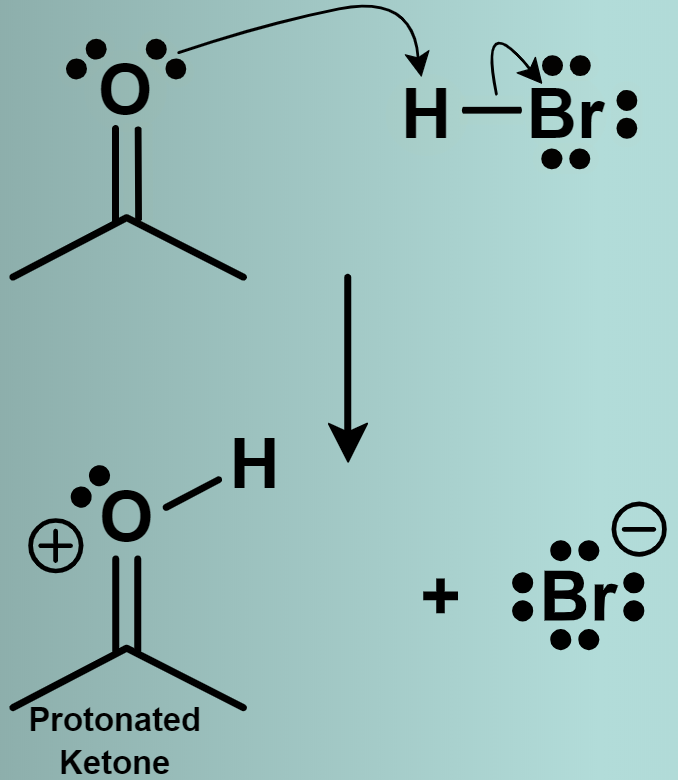 |
Chem21 transforms these static examples into interactive, active-learning exercises. Mechanism iTRQs are engaging, promotes lasting changes in long-term memory and can be reassigned for continued reinforcement. Click and drag on the drawing palette to create the mechanisms shown above.
Touch-screen Devices
- Touch an empty area of the drawing canvas - a small cursor appears to the left.
- When the cursor moves over electrons (electron pair or bond), it begins drawing a mechanism arrow.
- Drag the cursor through empty space until you reach the electrons that are attacking.
- Continue dragging until you reach the atom that is being attacked - a mechanism arrow will form behind the cursor.
- Lift your finger from the touch surface while the atom is highlighted to place a permanent arrow and hear a "tada" confirmation sound.
|
|
|
As a student progresses in Organic, they are expected to learn the mechanisms for over half of the 120-150 reactions. Many are multi-step with multiple intermediates, formal charges and specified stereochemistry. Assignable and repeatable iTRQs are an effective way to build and reinforce this knowledge in long-term memory.
The mechanism for Cyclohexene + Br2 is a great example . . . .

Cyclohexene + Br2 Mechanism Steps
- Click the alkene double bond and drag the mechanism arrow to the closest Br atom . . . you will hear a "tada" confirmation sound.
- Click the bond between the two Bromine atoms and drag the mechanism arrow to the right-most Br atom - you will hear a "tada" confirmation sound.
- Click a pair of electrons from the left-most Br atom and drag the mechanism arrow to one of the alkene carbons - you will hear a "tada" confirmation sound.
- Click on the correct intermediate.
- If you are unsure of the next mechanism step, wait 10 seconds for it to be displayed.
- Continue drawing mechanism arrows until the mechanism is complete - refer to the image above for help.
Chem21 has developed over 50 iTRQ mechanisms with plans to create ~ 50 more.